
smoke alarm beep: Brian Pruitt · on 17 July 2026 · 5 min read · Last reviewed 17 July 2026
A smoke alarm beep is a rapid, intermittent sound emitted by a smoke detector to indicate a low battery, a malfunction, or the presence of smoke or fire. In plain terms: it’s like the check-engine light of your home’s safety system, a persistent nudge to pay attention.
Key facts
- Most smoke alarms beep every 30-60 seconds when the battery is low.
- A continuous beep (not intermittent) often signals a malfunction or smoke detection.
- According to the National Fire Protection Association, three out of five home fire deaths occur in homes without working smoke detectors.
- The U.S. Consumer Product Safety Commission recommends testing smoke alarms monthly and replacing batteries at least once a year.
Smoke Alarm Beep: How to test a smoke alarm
To test a smoke alarm, locate the “Test” button on the device and press it for 5-10 seconds until you hear a loud beep. In plain terms: think of it like pressing a doorbell to ensure the chime is working.
Key facts
- Testing should be done at least once a month.
- If the alarm doesn’t beep when tested, replace the battery immediately.
- Many modern smoke alarms also have a “hush” button to temporarily silence nuisance alarms during cooking.
Smoke alarm maintenance
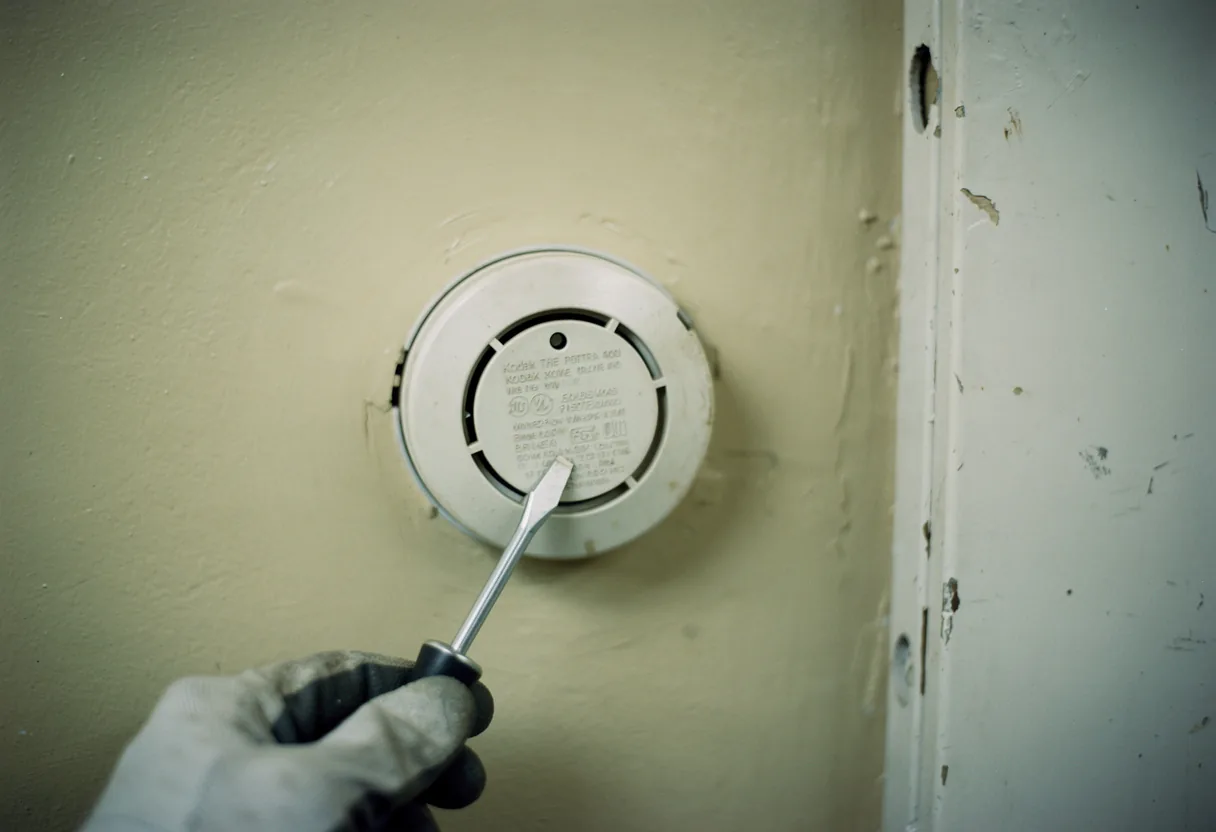
To maintain a smoke alarm, replace the batteries at least once a year and vacuum the device monthly to remove dust. In plain terms: treat it like a car, regular maintenance prevents breakdowns.
Key facts
- Alkaline batteries are recommended for most smoke alarms.
- Lithium batteries, often found in 10-year sealed alarms, can last the lifespan of the device.
- Replace the entire smoke alarm every 8-10 years, even if it appears to be working.
Smoke alarm safety
For smoke alarm safety, install alarms on every floor of your home, including inside and outside bedrooms. In plain terms: think of them as a network of safety checkpoints.
Key facts
- Interconnected smoke alarms are recommended for whole-home protection.
- Photoelectric alarms are better at detecting slow-smoldering fires, while ionization alarms respond faster to fast-flaming fires.
- Never disable a smoke alarm due to false alarms; instead, relocate it farther from cooking areas or sources of steam.
Where do I find sounds on my iPhone?
To find sounds on your iPhone, navigate to Settings > Sounds & Haptics, where you can access ringtones, text tones, and alert sounds. In plain terms: it’s like flipping through a sound effects library built into your device.
Key facts
- You can also use third-party apps like GarageBand to create or download custom sounds.
- Some apps, such as Soundboard Pro, offer extensive sound libraries for personalization.
- Apple’s Shortcuts app can be used to assign custom sounds to specific actions.
What are the 4 types of sounds?
The four types of sounds are vowels, consonants, diphthongs, and triphthongs. In plain terms: they’re the building blocks of spoken language, like the ingredients in a recipe.
Key facts
- Vowels are produced with an open vocal tract, while consonants involve partial or complete obstruction.
- Diphthongs and triphthongs are combinations of vowel sounds within a single syllable.
- English has about 44 distinct sounds, known as phonemes.
Where can I find sounds?
You can find sounds on platforms like Freesound, YouTube Audio Library, and Zapsplat, which offer free or royalty-free audio clips. In plain terms: think of them as digital sound libraries where you can browse and download.
Key facts
- Many platforms allow you to filter sounds by type, duration, and license.
- Some websites, like SoundCloud, also host user-uploaded sounds and music.
- For professional use, consider paid libraries like A Sound Effect or Epidemic Sound.
What are the 44 sounds of English?
The 44 sounds of English, known as phonemes, include 20 vowels and 24 consonants. In plain terms: they’re the unique units that make up all spoken words in the language.
Key facts
- Vowel sounds include short vowels (e.g., /æ/ as in “cat”), long vowels (e.g., /iː/ as in “see”), and diphthongs (e.g., /eɪ/ as in “day”).
- Consonant sounds include stops (e.g., /p/, /b/), fricatives (e.g., /f/, /v/), and affricates (e.g., /tʃ/, /dʒ/).
- The International Phonetic Alphabet (IPA) is used to represent these sounds accurately.
Choose a soundboard
When selecting a soundboard, consider factors like ease of use, sound quality, and customization options. In plain terms: pick one that feels like a well-organized toolbox of sounds.
| Soundboard | Ease of Use | Sound Quality | Customization |
|---|---|---|---|
| Soundboard Pro | High | High | Moderate |
| Boombox | Moderate | High | High |
| Zedge | High | Moderate | Low |
Key facts
- Soundboard Pro is known for its extensive library and user-friendly interface.
- Boombox offers high-quality sounds and advanced customization features.
- Zedge is a popular choice for free ringtones and alert sounds.
How to choose
Identify your primary use case, whether for ringtones, alerts, or entertainment, to choose the right soundboard. Next, evaluate the sound quality and customization options available. Finally, consider the platform’s ease of use and any associated costs.
- Identify your primary use case (e.g., ringtones, alerts, entertainment).
- Evaluate sound quality and customization options.
- Consider ease of use and associated costs.
- Read user reviews and ratings.
In my experience, the best soundboard for most users is one that balances quality, customization, and ease of use, like Soundboard Pro or Boombox. However, if you’re on a budget, Zedge offers a solid selection of free sounds.
For those who frequently use sounds on their devices, storing them in a dedicated app or folder can save time and keep your library organized. Additionally, using limited data options when downloading sounds can help manage bandwidth usage.
If you’re looking to create personalized content or advertising, consider using soundboard apps that allow for custom sound creation or editing. Platforms like GarageBand or Audacity offer advanced features for this purpose.
Recognizing various sound types and how to use them can improve your digital experience, whether for personal use or professional projects. Always prioritize safety with smoke alarms, and keep your devices up-to-date for optimal performance.
Frequently asked questions
Why does my smoke alarm keep beeping?
A smoke alarm beeping usually signals a low battery, dust buildup, or an expired unit. Replace the battery first. If the beeping persists, clean the alarm with compressed air or vacuum. If it's over 10 years old, replace it entirely.
How often should I test my smoke alarm?
Test your smoke alarm monthly. Press the test button to ensure the alarm sounds. If it doesn't, replace the battery or the unit. Also, replace batteries annually, even if the alarm hasn't beeped.
What’s the best way to maintain a smoke alarm?
Keep your smoke alarm clean and free of dust. Use a vacuum or compressed air to clean the vents. Check the manufacturer’s manual for specific maintenance tips. Ensure it’s installed correctly, typically on the ceiling or high on walls.
Where should I place smoke alarms in my home?
Install smoke alarms on every level of your home, including inside and outside sleeping areas. For stairways and hallways, place them at the top of stairs. Avoid placing them near windows, doors, or vents where drafts could interfere with their function.
Related Reading
- Alarm Clock: Features to Look for in Modern Digital Clocks
- Soundbar Sounds: Optimizing Home Theater Audio
Part of the Sound Design & Real-World Audio guide hub.